ผลของโปรแกรม “KIDS ULTRA BENZ 10” ต่อความรอบรู้ด้านสุขภาพและพฤติกรรมการบริโภคอาหารของนักเรียนประถมศึกษาปีที่ 4 – 6 ที่มีภาวะโภชนาการเกินในจังหวัดศรีสะเกษ
คำสำคัญ:
ความรอบรู้ด้านสุขภาพ, พฤติกรรมการบริโภคอาหาร, ภาวะโภชนาการเกิน, เด็กวัยเรียน, โปรแกรม “KIDS ULTRA BENZ 10”บทคัดย่อ
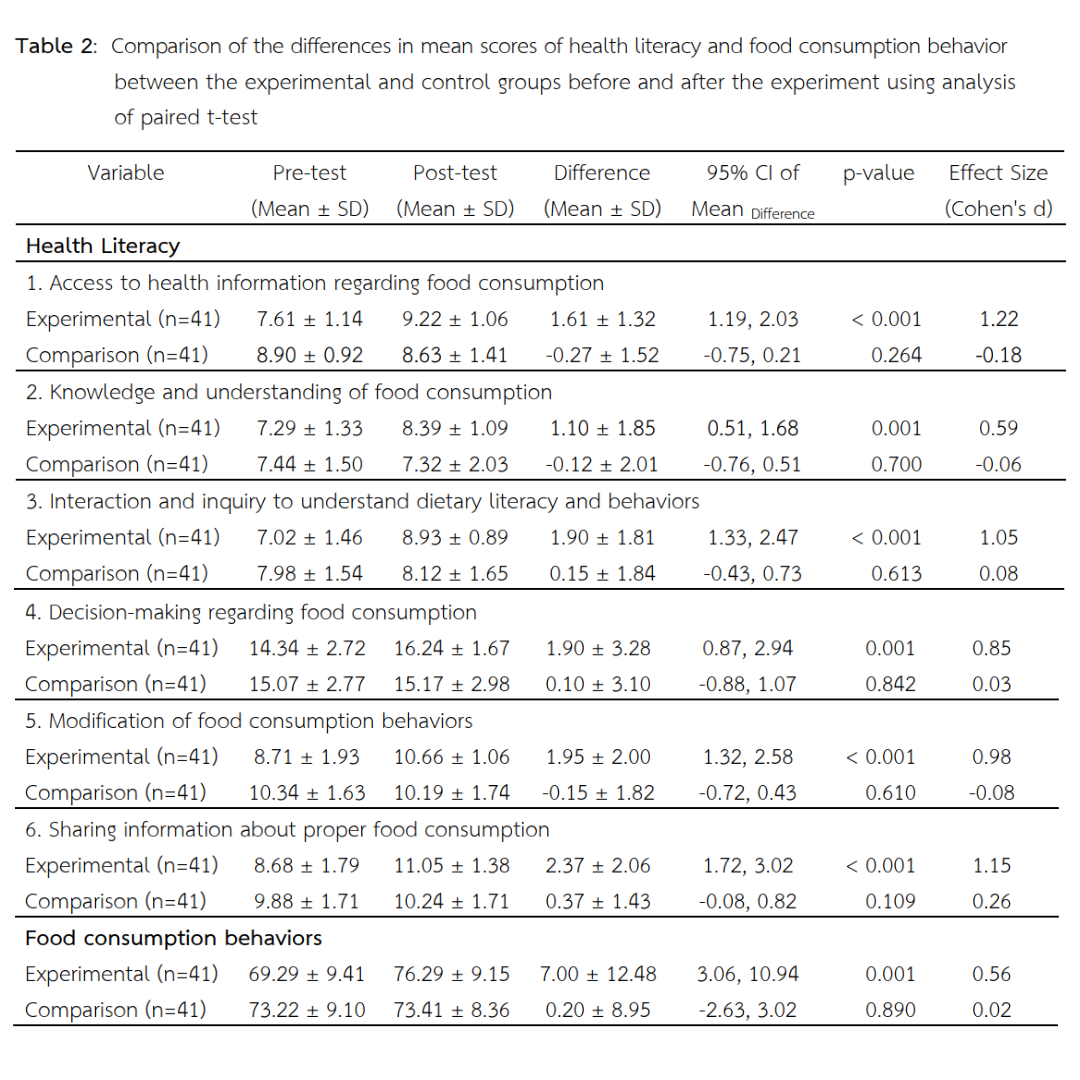
ภาวะโภชนาการเกินและโรคอ้วนในเด็กวัยเรียนเป็นปัญหาสำคัญทางสาธารณสุขและนำไปสู่การเกิดโรคไม่ติดต่อเรื้อรัง หากเด็กวัยเรียนมีทักษะความรอบรู้ด้านสุขภาพและมีพฤติกรรมการบริโภคอาหารที่ถูกต้อง จะช่วยให้มีภาวะโภชนาการสมส่วนและป้องกันโรคไม่ติดต่อเรื้อรังได้ งานวิจัยรูปแบบกึ่งทดลองนี้ มีวัตถุประสงค์เพื่อศึกษาผลของโปรแกรม “KIDS ULTRA BENZ 10” ในการส่งเสริมความรอบรู้ด้านสุขภาพและพฤติกรรมการบริโภคอาหารของนักเรียนชั้นประถมศึกษาปีที่ 4 – 6 ที่มีภาวะทุพโภชนาการเกิน ในจังหวัดศรีสะเกษ กลุ่มตัวอย่าง คือ เด็กนักเรียนชั้นประถมศึกษาปีที่ 4 – 6 ที่มีภาวะท้วม เริ่มอ้วน และอ้วน จำนวน 82 คน แบ่งเป็นกลุ่มทดลอง 41 คน และกลุ่มเปรียบเทียบ 41 คน กลุ่มทดลองเข้าร่วมโปรแกรม “KIDS ULTRA BENZ 10” เป็นระยะเวลา 10 สัปดาห์ ในขณะที่กลุ่มเปรียบเทียบดำเนินชีวิตตามปกติ เครื่องมือที่ใช้ในการเก็บข้อมูลคือแบบสอบถามความรอบรู้ด้านสุขภาพและพฤติกรรมสุขภาพ การวิเคราะห์ข้อมูลใช้สถิติเชิงพรรณนและสถิติอนุมาน ได้แก่ Independent t-test, Paired t-test, Chi-square test of independence และ Logistic regression ผลการวิจัยพบว่า ภายหลังการทดลอง กลุ่มทดลองมีค่าเฉลี่ยคะแนนความรอบรู้ด้านสุขภาพทั้ง 6 องค์ประกอบ และพฤติกรรมการบริโภคอาหารเพิ่มขึ้น โดยมีความแตกต่างระหว่างก่อนและหลังการทดลองอย่างมีนัยสำคัญทางสถิติ (p-value < 0.05) ในขณะที่กลุ่มเปรียบเทียบพบว่าค่าเฉลี่ยคะแนนความรอบรู้ด้านสุขภาพและพฤติกรรมการบริโภคอาหารก่อนและหลังการทดลองไม่แตกต่างกัน สรุป โปรแกรม “KIDS ULTRA BENZ 10” มีผลสัมฤทธิ์ในการช่วยยกระดับความรอบรู้ด้านสุขภาพ และสามารถนำไปสู่การปรับเปลี่ยนพฤติกรรมการบริโภคอาหารในเด็กวัยเรียนที่มีภาวะโภชนาการเกิน หน่วยงานที่เกี่ยวข้องควรพิจารณาบูรณาการแนวทางการสร้างความรอบรู้ด้านสุขภาพที่เน้นการเรียนรู้เชิงรุกและเทคโนโลยีดิจิทัลเข้าเป็นส่วนหนึ่งของนโยบายโรงเรียนส่งเสริมสุขภาพระดับชาติ เพื่อสร้างกลไกการแก้ไขภาวะโภชนาการเกินในเด็กวัยเรียนที่มีประสิทธิภาพ
เอกสารอ้างอิง
Bandura, A. (1997). Self-efficacy: The exercise of control. New York, NY: W. H. Freeman.
Chirawatkul, A. (2009). Statistics for Health Science Research. Bangkok: Witthaypat.
Chuaykaew B. et al. (2021). The Effects of the Health Literacy Enhancement Program on Food Purchasing Behaviors Among Upper Elementary School Students in Trang Province. Journal of Health and Nursing Education, 27(2), 185-200.
Department of Health. (2023). Situation report on the nutritional status of school-age children and adolescents in Thailand. Nonthaburi: Ministry of Public Health.
Division of Non Communicable Diseases, Department of Disease Control. (2024, March 11). Obese children die easily: 1 in 10. https://web.facebook.com/photofbid=808389514660808&set=pcb.808389774660782
Health Education Division, Department of Health Service Support. (2015). Development of a health literacy measurement tool for upper primary school students. n.p.
Kalpakdee W. et al. (2022). Health Literacy about Overnutrition in Elementary School Students under the Municipal Administration of Mueang District, Suphanburi Province. Lanna Public Health Journal, 18(1), 80-91.
Kowkom P. et al. (2024). Effects of Health Literacy Promotion Program on Obesity Prevention Behaviors and the Body Weight of School-age Children with Overnutrition. NU Journal of Nursing and Health Sciences, 18(1), 188-201.
Kulnit, N. (2024). The Development of Health Behavior Program for Upper Primary School-aged Children with Over Nutrition. Journal of Environmental and Community Health, 9(3), 251-261.
Petchtang S. et al. (2023). Effects of Health Promotion Program on Knowledge, Eating Behavior, Exercise Behavior and Body Weight of Overweight Students in Primary School. Thai Red Cross Nursing Journal, 16(1), 135-148.
Phengchan, W. (2017, February 1). Health literacy based on the V-Shape concept. Department of Health. https://www.anamai.moph.go.th/web-upload/migrated/files/www/n10221_17836d988cffc6315ab2ad1e4f856045_article_20170202120101.pdf
Saeloo J. & Wiriyasirikul N. (2020). The Relationship Between Health Literacy and Obesity Prevention Behaviors of School Age Children with Overweight and Obesity in Schools Under Primary Educational Service Area Office Mueang District, Nakhon Si Thammarat Province. Journal of MCU Nakhondhat, 7(11), 1–15.
Singtong T. et al. (2020). Effects of a Nutrition Literacy Promotion Program on Eating Behavior of Secondary School Students. Thai Journal of Public Health, 50(2), 148-160.
Srinark A. et al. (2020). Effects of Health Promotion Program for Healthy Eating Behavior of Grade 4 Students in Nonthaburi Province. Journal of Health and Nursing Research, 37(2), 237-250.
Waloh W. et al. (2022). Effects of Self-Efficacy Promoting Program through Family Participation upon Food Consumption Knowledge and Nutritional Status among Upper-Primary School Underweight Muslim Children, Pattani Province: A Pilot study. Princess of Naradhiwas University Journal, 15(1), 98-120.
ดาวน์โหลด
เผยแพร่แล้ว
วิธีการอ้างอิง
ฉบับ
บท
การอนุญาต
ลิขสิทธิ์ (c) 2026 วารสารสาธารณสุขมูลฐาน (ภาคตะวันออกเฉียงเหนือ)

This work is licensed under a Creative Commons Attribution-NonCommercial-NoDerivatives 4.0 International License.